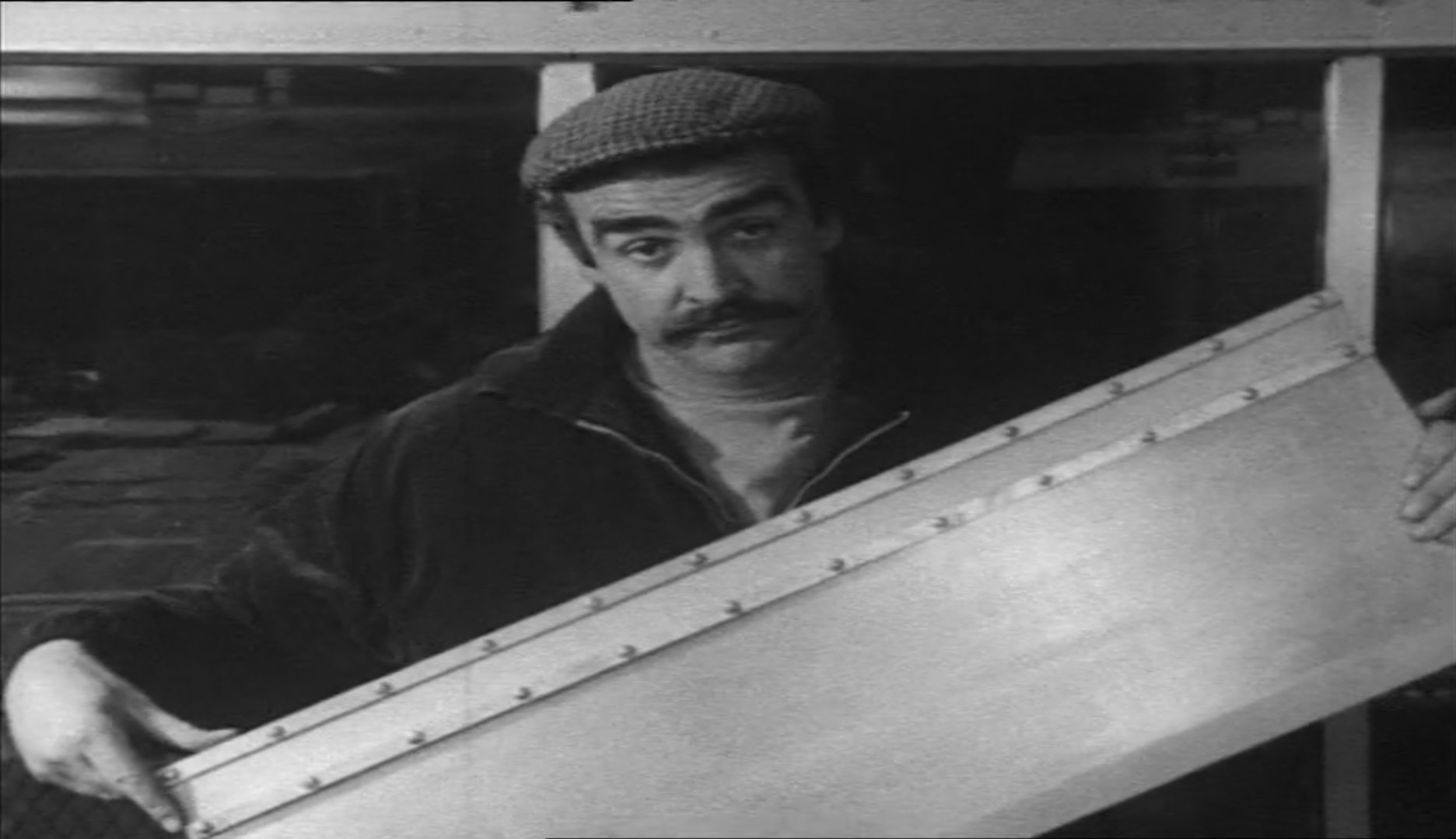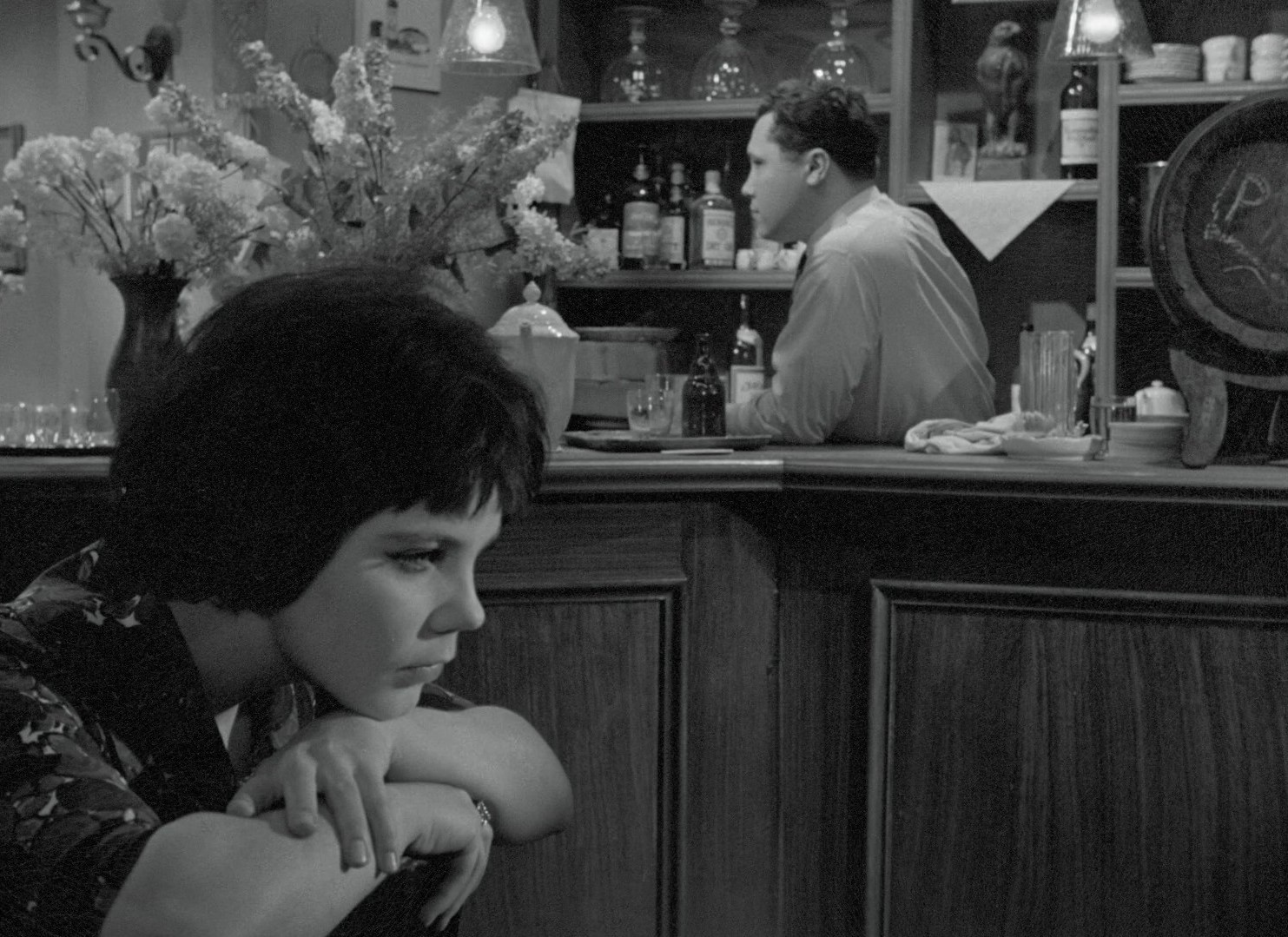
„Labios rojos“, der zweite Langfilm erst des notorisch arbeitswütigen Jazzmusikers wie Filmemachers Jesús Franco und auf den bemerkenswerten Gesamtkarriereumfang gerechnet nicht einmal ein Prozent der Dinge, die da noch kamen, ist dennoch – wie auch sein ein Jahr früher entstandenes Debüt „Tenemos 18 años“, wenngleich im weniger ausladenden Umfange – ein Film, der beispielhaft verdichtet, was sich über mehrere kinematografische Häutungen hinweg wieder und wieder in neu wie anders gedachter Form herausschälen sollte. Musik, konkreter – und in Abgrenzung zu mit der Wirkung dezidiert und selbst im Universum des Filmes nicht selten bereits eingefangenen Aufnahmen erzählenden Musikliebenden wie Roberta Findlay oder Eckhart Schmidt – der Akt des Musizierens an sich, die Performance, auch das Improvisieren über melodische Grundrisse. Dazu das Spiel mit der Architektur des Filmischen selbst, die Grenzüberschreitung des guten Konstruktionsgeschmackes, deren Extravaganzen die Figuren prägen und von diesen zurückgeprägt werden. Weiterlesen “Neigungswinkel im Nachtclubdunst – Musikalische Selbstermächtigung und der Einstellungswinkel als Raumvermesser bei Jesús Franco am Beispiel von „Labios rojos“ (1960)” »
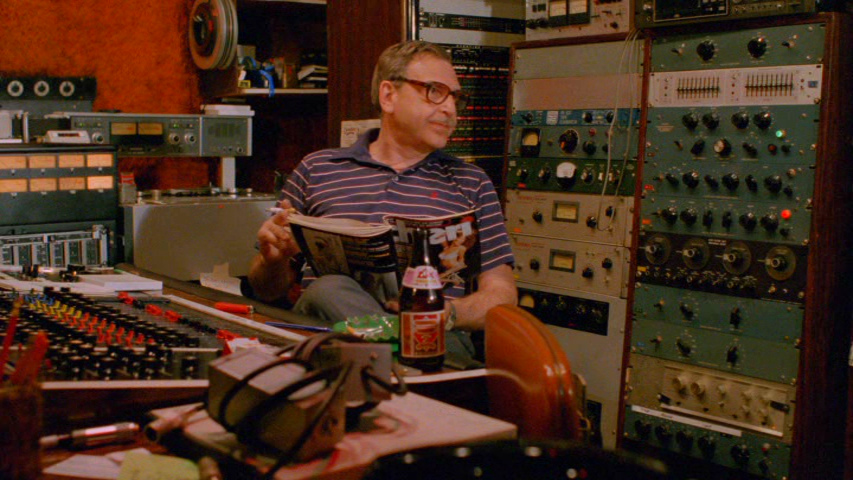
Walter E. Sear in „Lurkers“ (Roberta Findlay, 1988)
To the eternal love of Walter E. Sear and Roberta Findlay
Between the the 27th and 29th of April 2020 the footprint Walter E. Sear left in the world of music, filmmaking but more than that human interaction lingers on especially dominant before gradually retreating again to where all things now unliving and carried on by fond memories alone reside. For today is stuck precisely between what would have been his 90th birthday and what will be the 10th anniversary, the first real milestone, the harshest one for most bereaved, of his passing. Sear, a New Yorker since practically ever, his family moved to Queens when he was only one year old, and forever, was a pioneering recording engineer and tinkerer on all things emitting peculiar sounds, a musician and composer, he produced films, wrote, scored, directed and sold them as successfully as he sold instruments. And that’s only half it, a person like him can only ever be measured in half truths and thinly veiled wonder. He was a true powerhouse of creative thought. Thought that must have connected him easily and even in fleeting everyday passing to another powerhouse of imaginative ventures when they first ran past each other in the decidedly non-romantic offices their different yet closely entwined lines of work made them frequent. Walter E. Sear and Roberta Findlay met in 1976, petty circumstances, while visiting a fellow yet inconsequential for theirs connection and they grew inseparable soon after. Weiterlesen “Remembrances floating between two dates – Walter E. Sear (1930 – 2010)” »
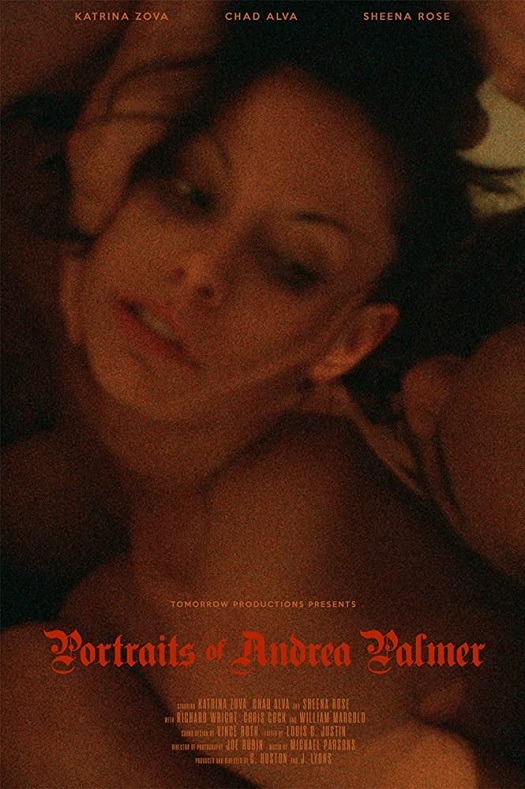
„Portraits of Andrea Palmer“, the first feature film for both and directed in conjunction by a certain „C. Huston“ and film preservationist collective Vinegar Syndrome’s Joe Rubin (billed under his film board nom de guerre „J[ohn]. Lyons“), is in many ways an unusual venture – when measured against its date of production, even a deeply anachronistic one. For it is not merely a superficial hommage to the long-gone Golden Age of Porn that raged in American cinemas for some approximately 15 years from the very late 60’s to the mid-80’s, elicits it’s filmic (as in analogue filmmaking, granularity and a color cast unique to employed – 16mm here – stock) as well as organisitional (as in centered around, not working with unsimulated renditions of intercourse) structure, shares it’s curious interest in gloomy subject matter coupled with precise gaugings of female suffering, but actually possesses a profound understanding of it’s highly specific employment of filmed sex like few, if any, modern efforts. Weiterlesen “Contortions of a mind in perpetual decline – Portraits of Andrea Palmer (2018)” »
April 12, 2020 | Veröffentlicht in
Aktuelles Kino,
Ältere Texte,
André Malberg,
Blog,
Blogautoren,
English,
Essays,
Filmbesprechungen,
Midnight Confessions,
other languages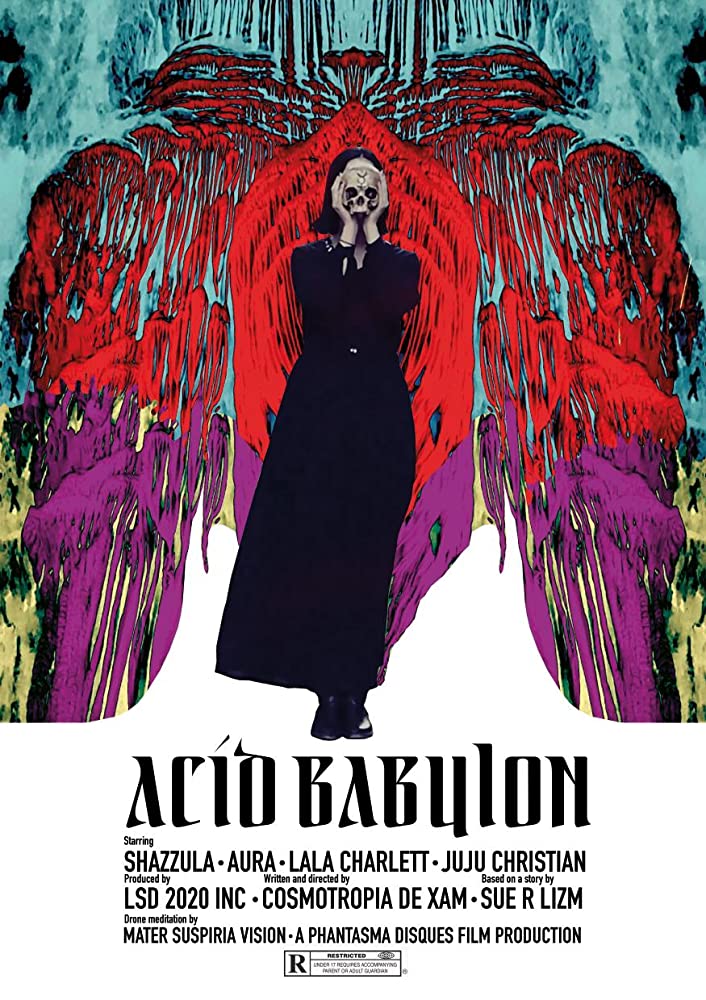
Gemeinhin sollte man annehmen, dass Filme, die derart huldigend von einem bekannten Schauplatz zum nächsten eilen, wie Cosmotropia de Xams jüngst im Würgegriff der Coronakrise gänzlich digital uraufgeführter „Acid Babylon“ es handhabt, unwillkürlich zur reinen Fanrevue verkommen müssten. „Build on the cosmic spirit of these places“, heißt es im Abspann über ihn selbst sowie seine durch „Lucifer Rising“ (Kenneth Anger, 1980), „Phenomena“ (Dario Argento, 1985) oder „Malpertuis“ (Harry Kümel, 1971) in nicht unbeträchtlichen Teilen des filmkulturellen Gedächtnisses abgelegten Schauplätze. Ein guter Leitfaden für diese strukturell überwältigende, narrativ oder gar didaktisch jedoch schweigsame Versuchsanordnung. Hier werden sie noch einmal ganz neu angelegt, diese Gedächtnisorte des Abseitigen. Weiterlesen “Zeitnah gesehen: Acid Babylon (2020)” »

Gebären, Tod, gewirktes Einerlei,
Lallen der Wehen, langer Sterbeschrei,
Im blinden Wechsel geht es dumpf vorbei.(Georg Heym – Die Stadt)
Weiterlesen “Die Stadt in 52 Minuten: Il tram (1973)” »
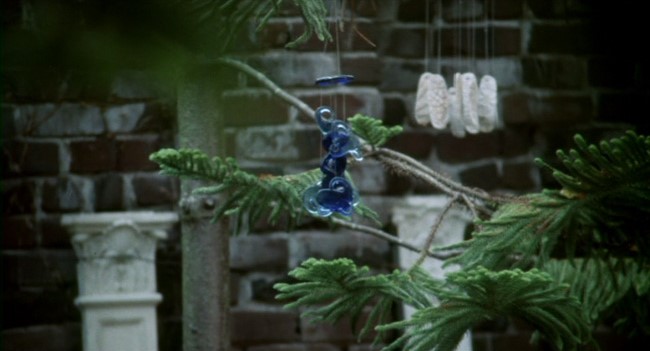
Have you ever pondered about the question of how a film centered around authentic, thus outwardly far more equable renditions of intercourse can manage to tell encounter from encounter, to dinstinguish the metaphysical weight being thrown around so freely? Anthony Spinelli’s „The First Time“, the prolific director’s final offering in a longstanding streak of outré, highly avantgarde films preceding his second coming as careful constructor of more narratively inclined fare, seems to have been constructed entirely around this very idea and adds the further challenge of answering without ever sacrificing its carelessly understated tone. Weiterlesen “The First Time (1978) or: How to separate sex from sex with Anthony Spinelli” »
Februar 3, 2020 | Veröffentlicht in
Ältere Texte,
André Malberg,
Blog,
Blogautoren,
English,
Essays,
Filmbesprechungen,
Filmschaffende,
Filmtheorie,
Midnight Confessions,
other languages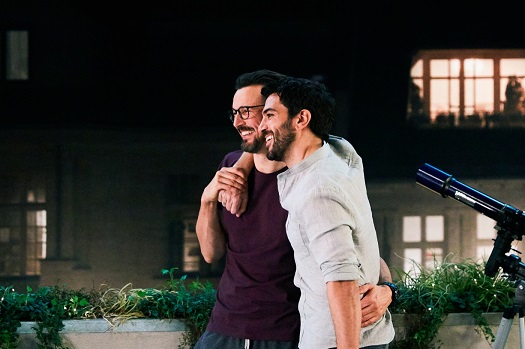
Seht ihr den Mond dort stehen?Er ist nur halb zu sehen,
Und ist doch rund und schön.
So sind wohl manche Sachen,
Die wir getrost belachen,
Weil unsre Augen sie nicht sehn.
(Matthias Claudius – Der Mond ist aufgegangen)
Weiterlesen “…und als Dach ein Himmel voller Zauber – Das perfekte Geheimnis (2019)” »